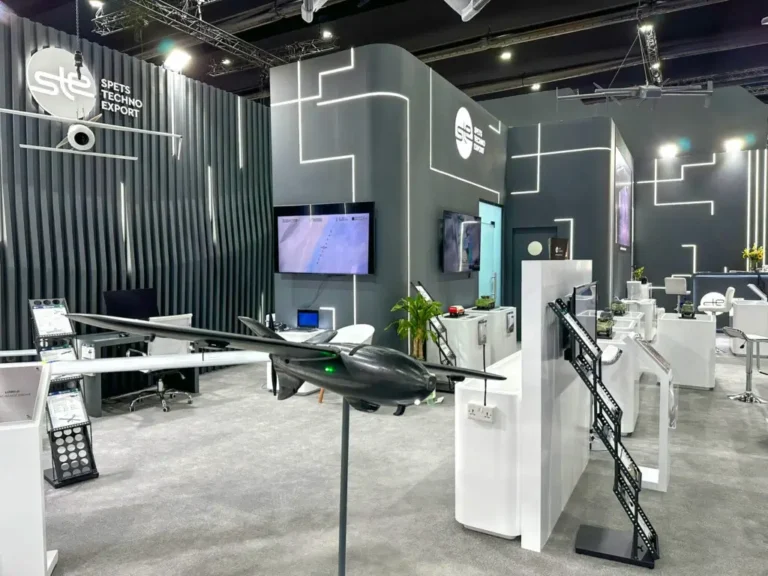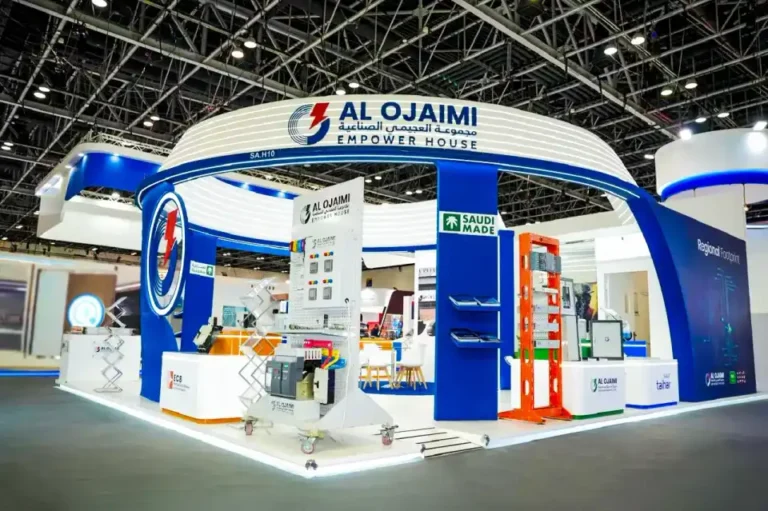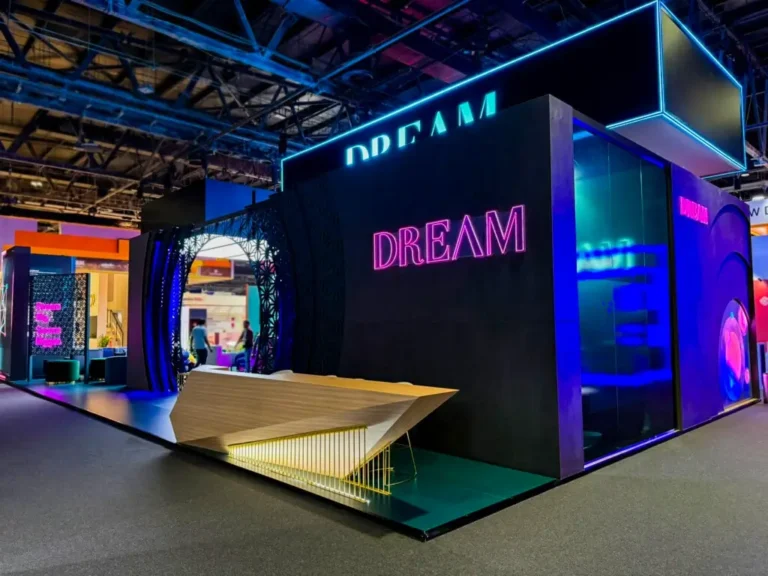

How does the exhibition stand design process work?
Exhibition stand design and build is a single service that takes a trade show stand from the first brief to the finished structure. It includes concept development, 3D design, technical drawings, organizer approval, workshop fabrication, on-site installation, and dismantling. For a major UAE show, a custom stand typically takes three to six months from brief to show opening.
This guide is for marketing and procurement teams planning a stand at a UAE exhibition. It explains how stands are designed and built, what venue requirements to consider, how long the process takes, and how to assess a design and build partner before signing a contract.
In This Guide
- What is exhibition stand design and build?
- How does the exhibition stand design process work?
- What makes a good exhibition stand design?
- How is an exhibition stand built?
- Which Dubai venues and shows shape stand design in 2026 and 2027?
- How long does exhibition stand design and build take?
- Do stand designs need venue approval in Dubai?
- What shapes the cost of design and build?
- How do you choose a design and build partner?
- How does Levo Exhibitions design and build stands?
- Frequently asked questions
1. What Is Exhibition Stand Design and Build?
Exhibition stand design and build means one contractor creates the stand concept and then fabricates, installs, and dismantles it. The design team and build team work under one contract, helping ensure that the stand approved on screen is the stand that appears in the exhibition hall.
There are three ways to commission a custom stand. The differences can affect responsibility, costs, and the finished result.
| Model | Who Does What | Where It Can Go Wrong |
|---|---|---|
| Design Only | A studio creates the concept, and you appoint a separate fabrication contractor. | The fabricator may reinterpret the design or price it differently from what you expected. |
| Build Only | A workshop fabricates the stand using drawings you supply. | No single party may own the design intent, approvals, and visitor experience. |
| Design and Build | One contractor handles the concept, drawings, approvals, fabrication, installation, and dismantling. | There are fewer handoffs, and responsibility for coordinating the project sits with one team. |
In Dubai, many large exhibitors book a space-only plot, which means the structure above the floor must be designed and made to order. The connection between the designer’s drawings and the workshop’s output is therefore especially important.
If you already know what you need and want to compare providers, visit our Levoexhibition stand builder in Dubai page. If you want to understand the process first, read on.
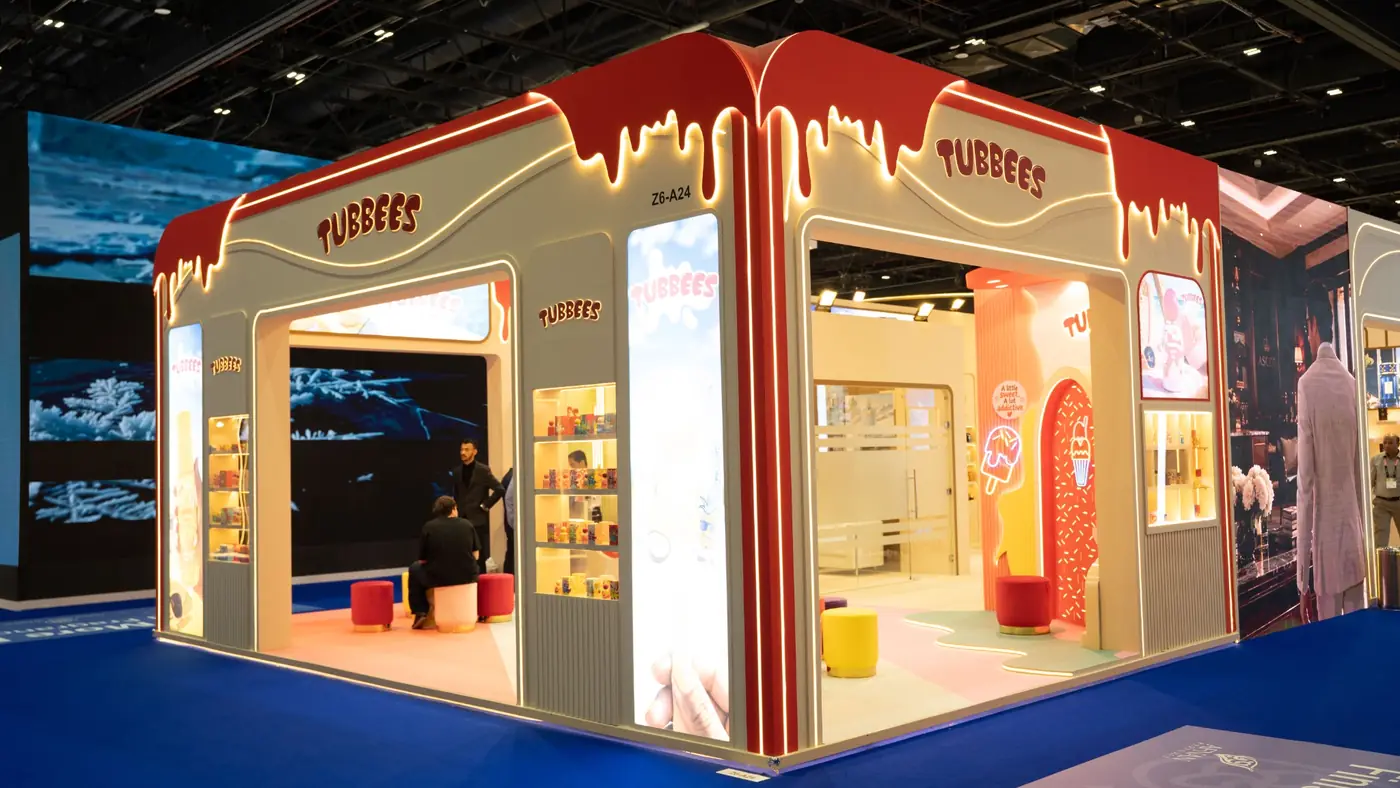
2. How Does the Exhibition Stand Design Process Work?
The exhibition stand design process moves from the brief to concepts, 3D visuals, design development, and technical drawings, before the final design is submitted to the organizer. Each stage narrows the options, so decisions made early can save time later.
- Brief. The designer learns what the stand must achieve, such as product launches, lead targets, meetings, products to display, and the visitors you want to attract. Stand size, open sides, and brand guidelines are also discussed.
- Site and rules review. The designer reviews the exhibition manual and floor plan, including the hall position, neighboring stands, height limits, rigging points, and restrictions on double-deck structures.
- Concept and 3D visuals. One or more design directions are presented with 3D renders and a floor layout so you can review visitor flow and sightlines before fabrication.
- Design development. The selected concept is refined. Materials, finishes, lighting, screens, product displays, storage, and meeting spaces are specified.
- Technical drawings. Plans, elevations, structural details, and electrical layouts are prepared for the workshop and organizer.
- Design freeze. You approve the final design. Changes after this point can affect timelines and costs because fabrication and approvals depend on the approved details.
One common cause of delay is a brief that changes after the concept stage. A clear brief with agreed objectives is one of the most useful ways an exhibitor can help keep the project on schedule.
3. What Makes a Good Exhibition Stand Design?
A good exhibition stand design is built around a measurable objective, attracts attention from the aisle, and turns that attention into useful conversations. The stand should deliver a clear visitor experience and encourage a relevant next step, not simply look impressive in photographs.
- Start with one objective. A product launch, lead-generation campaign, and stand focused on pre-booked meetings need different layouts. Decide which outcome matters most.
- Make the message readable from the aisle. Visitors decide quickly whether to stop. One clear message and one hero product can be more effective than a wall of claims.
- Balance open and private areas. Use open corners to invite visitors in and provide a quieter zone or meeting room for detailed conversations.
- Use lighting with intent. Lighting can draw attention to key products and help the stand remain visible in a busy exhibition hall.
- Choose materials that support the brand. Finishes, textures, and colors contribute to how visitors perceive quality.
- Plan space for the team. Include hidden storage for stock and bags, staff routes that avoid visitor traffic, and suitable seating.
- Plan lead capture in advance. Decide whether leads will be collected through the organizer’s scanning app, a tablet, or a meeting-booking system, and include the required space in the layout.
A useful brief starts with a business outcome, such as the number of qualified meetings the team wants to hold, rather than only the stand’s square footage. Design decisions should follow from that objective.
4. How Is an Exhibition Stand Built?
An exhibition stand is usually fabricated in a workshop, transported to the venue, and assembled during the organizer’s build-up window. Joinery, metalwork, graphics, lighting, and audiovisual elements are prepared and checked off-site so that on-site work can focus on assembly and finishing.
- Fabrication. Carpenters, metal fabricators, painters, and graphics teams turn the technical drawings into panels, frames, counters, feature walls, and flooring.
- Quality checks. Finishes, joints, lighting, and screens are checked in the workshop, where problems can often be corrected more easily than on-site.
- Logistics. Components are packed, labeled, and transported according to the venue schedule. Hall access is arranged in advance.
- Installation. The crew assembles the structure, connects power and audiovisual equipment, lays the floor, applies graphics, and completes the stand within the allocated build-up period.
- Show support and dismantling. A designated contact remains available while the show is open. After closing, the stand is dismantled within the breakdown window, and reusable elements may be stored for future events.
The quality seen on the show floor depends heavily on workshop preparation. When assessing a design and build contractor, ask whether you can see examples of its fabrication work or visit its workshop.
5. Which Dubai Venues and Shows Shape Stand Design in 2026 and 2027?
Major UAE exhibitions take place at venues including Dubai World Trade Centre (DWTC), Dubai Exhibition Centre (DEC) at Expo City Dubai, and ADNEC in Abu Dhabi. Each venue has its own height limits, build rules, and access arrangements, so the venue should be considered from the beginning of the design process.
Venue changes can affect stand planning. GITEX Global’s 2026 edition is scheduled at Dubai Exhibition Centre, while WHX Dubai is scheduled at DEC and WHX Labs remains at DWTC. Gulfood 2027 is listed across DWTC and DEC. Confirm the latest venue and hall information with the organizer before finalizing your design.
| Exhibition | Dates | Venue |
|---|---|---|
| ADIPEC 2026 | November 2–5, 2026 | ADNEC, Abu Dhabi |
| GITEX Global 2026 | Summit: December 7; exhibition: December 8–11, 2026 | Dubai Exhibition Centre, Expo City Dubai |
| WHX Dubai 2027 (formerly Arab Health) | January 25–28, 2027 | Dubai Exhibition Centre, Expo City Dubai. WHX Labs is at DWTC. |
| Gulfood 2027 | March 15–19, 2027 | Dubai World Trade Centre and Dubai Exhibition Centre |
Dates and venue information should be reconfirmed with the event organizer and the exhibitor manual before the design is finalized, as event details can change.
6. How Long Does Exhibition Stand Design and Build Take?
A custom exhibition stand for a major UAE show typically takes three to six months from the first brief to show opening. Design and approvals take a substantial part of that period; workshop fabrication commonly takes four to six weeks, while on-site installation takes place during the venue’s allocated build-up window.
| When | Design Stage | Build Stage |
|---|---|---|
| 5–6 months before the show | Define the brief and objectives, and shortlist potential partners. | Initial planning and feasibility checks. |
| 4 months before the show | Review concepts, 3D visuals, and the proposed layout. | Source materials with long lead times where needed. |
| 3 months before the show | Develop the design, prepare technical drawings, and finalize the design. | Plan workshop production. |
| 6–10 weeks before the show | Submit designs by the organizer’s deadline, which varies by event. | Begin fabrication when the required drawings and approvals are in place. |
| Final 4–6 weeks | Approve final graphics and outstanding details. | Complete fabrication, quality checks, and logistics. |
| Build-up days | Complete final checks and prepare a snag list. | Install the stand and finish on-site work. |
| After the show | Review what worked and document lessons for future events. | Dismantle the stand and store reusable components. |
Large, double-deck, or technology-heavy stands may need more time. Work backward from the show date: for example, exhibitors preparing for Gulfood in March 2027 should begin planning well in advance, while a late-January 2027 show may leave a tighter window if planning has not started.
7. Do Stand Designs Need Venue Approval in Dubai?
Yes. Space-only stand designs generally need organizer approval before build-up, and applicable venue and local requirements must be followed for materials, electrical systems, and structural safety. The exact submission process and requirements depend on the event and venue, so check the current exhibitor manual.
Approval affects design decisions from the start. Heights, overhangs, double-deck structures, rigging, and material fire ratings may be checked against the venue’s rules. A design that does not meet the requirements may need revision before work can proceed.
A design and build contractor may prepare and submit the following documents on the exhibitor’s behalf:
- Stand plans and elevations showing dimensions and heights.
- Structural details for double-deck stands, rigging, or large overhead elements.
- Electrical layouts and power requirements.
- Material specifications, including applicable fire ratings.
- Risk assessments, method statements, and proof of insurance where required.
Some organizers require contractors to register before submitting designs for review. Confirm this early. Exhibitors should also understand their own compliance responsibilities and ensure submissions are made before the deadline.
8. What Shapes the Cost of Design and Build?
The cost of a custom exhibition stand depends on its size, structure, materials, technology, venue services, logistics, schedule, and potential for reuse. Design decisions made early affect both the specifications and the work required to fabricate and install the stand.
| Factor | Effect on Design | Effect on Build |
|---|---|---|
| Size and open sides | More surfaces and visitor approaches need to be designed and branded. | May require more structure, finishing, and graphics. |
| Structure | Double-deck structures and rigging may need engineering input. | Can require additional fabrication, crew, and approvals. |
| Materials and finishes | Premium materials and detailed specifications influence the look and feel. | May increase workshop time and installation complexity. |
| Technology | Screens and interactive elements must be integrated into the layout. | Hardware, integration, testing, and on-site support may add costs. |
| Venue services | Power, water, and internet access must be planned. | Services may need to be ordered through the organizer or venue. |
| Logistics | Components should account for transport and hall access. | Transport, labor, and build-up schedules affect costs. |
| Timeline | A shorter schedule may limit design options. | Expedited production and overtime can increase costs. |
| Reuse | Components can be designed for storage and adaptation. | Reusable components may spread costs across multiple shows. |
Beyond the initial price, consider what the stand is expected to achieve, such as qualified conversations, meetings held, and new business opportunities.
9. How Do You Choose a Design and Build Partner?
Choose a design and build partner based on completed projects, venue experience, fabrication capability, a clear approval process, and reliable project management. Ask for evidence of stands as built, not only 3D renders, and establish who will be responsible from the first brief through dismantling.
| What to Check | Question to Ask | What a Good Answer Looks Like |
|---|---|---|
| Built versus rendered | Can we see photos of stands you designed and built? | Completed project photos that can be compared with the original renders. |
| Venue experience | Which stands have you delivered at this venue? | Relevant projects at DWTC, DEC, or ADNEC, preferably in your sector. |
| In-house capability | Are design, project management, and fabrication handled in-house? | A clear explanation of what is handled internally and what is subcontracted. |
| Brief before design | What do you need from us before developing the concept? | Questions about objectives, visitors, products, and meetings—not only square footage. |
| Approvals | How do you prepare drawings for organizer approval? | A defined process based on the applicable exhibitor manual. |
| Project management | Who is our contact from the brief to dismantling? | One named project manager coordinating the project. |
| Show-day support | Who can we contact if an issue occurs during the show? | A defined support arrangement with an on-site or readily available technician or manager. |
| References | Can we speak to a recent client? | A reference from a client who attended a comparable exhibition. |
Red flags include proposals with visuals but no technical drawings, designers who do not ask what the stand must achieve, a lack of relevant venue experience, and unclear answers about approvals.
10. How Does Levo Exhibitions Design and Build Stands?
Levo Exhibitions is a Dubai-based exhibition stand design and build company that works from the client’s objectives through design, fabrication, installation, and dismantling. Its process brings design and production together, with a project manager coordinating the project from the first brief to the final breakdown.
- Design that starts with the objective. The design process begins by identifying what the stand needs to achieve, helping give each zone a clear purpose.
- Designers and makers in one team. Collaboration between the people drawing the stand and those making it helps maintain consistency with the approved design.
- Approval coordination. Drawings are prepared with the venue’s requirements in mind and submitted as agreed with the client.
- Workshop fabrication. Components are produced and checked before they reach the exhibition hall.
- One project manager. A single point of contact coordinates the project from the brief to dismantling, with support arrangements for the show period.
Levo Exhibitions reports experience delivering stands at ADIPEC, GITEX, Gulfood, and the Dubai Airshow, including a 205-square-meter stand for GERAB. The company reports a 4.7 out of 5 rating across 18 reviews. Confirm these figures and project details before publication.
11. Frequently Asked Questions
What is the difference between exhibition stand design and stand building?
Design covers the concept, 3D visuals, layout, and technical drawings. Building covers fabrication, installation, and dismantling. A design and build contractor provides both under one contract, reducing handoffs between separate companies.
How long does it take to design an exhibition stand?
Allow approximately two to three months from the initial brief to design freeze for a custom stand. This period covers concepts, 3D visuals, design development, and technical drawings, although the schedule varies by project and event deadline.
How long does it take to build an exhibition stand?
Workshop fabrication commonly takes four to six weeks. Installation then takes place at the venue during its allocated build-up period.
What should an exhibition stand design brief include?
Include the exhibition name, stand number and size, open sides, main objective, products to display, planned meetings, brand guidelines, and photos of any previous stand. A clear objective helps the designer develop a more relevant first concept.
Can the design change after it has been approved?
Small changes, such as some graphic updates, may be possible late in the process. Structural changes after design freeze can require revised drawings, a new organizer submission, and additional fabrication time. Confirm the impact before approving changes.
Can a custom exhibition stand be reused?
Yes. If planned for reuse, feature walls, counters, display units, and audiovisual structures can be designed for storage and adapted for future shows. Reuse depends on the components, condition, and requirements of each event.
Is GITEX Global still held at Dubai World Trade Centre?
GITEX Global 2026 is scheduled at Dubai Exhibition Centre, Expo City Dubai. The summit is scheduled for December 7, 2026, and the exhibition for December 8–11, 2026. Confirm dates and venue details with the organizer before making arrangements.
Can a Dubai-based design and build company deliver stands outside the UAE?
Some Dubai-based companies deliver exhibition stands internationally. Confirm the company’s geographic experience, local supplier arrangements, logistics capabilities, and project management plan for the destination country.
Planning a Stand for an Upcoming Show?
Tell us which exhibition you are attending and what you want the stand to achieve. The Levo Exhibitions team can discuss your brief and the requirements for your event.
WhatsApp: +971 55 552 5709
Call: +971 4 359 3600
Email: info@levoworld.com
Or send your brief through the inquiry form on the Levo Exhibitions website.